For by Him were all things created, that are in heaven, and that are in earth, visible and invisible,...For the invisible things of Him from the creation of the world are clearly seen, being understood by the things that are made, ...so that THEY ARE WITHOUT EXCUSE: Col 1:16 / Rom.1:20
Showing posts with label Visual Cortex. Show all posts

Saturday, April 6, 2024

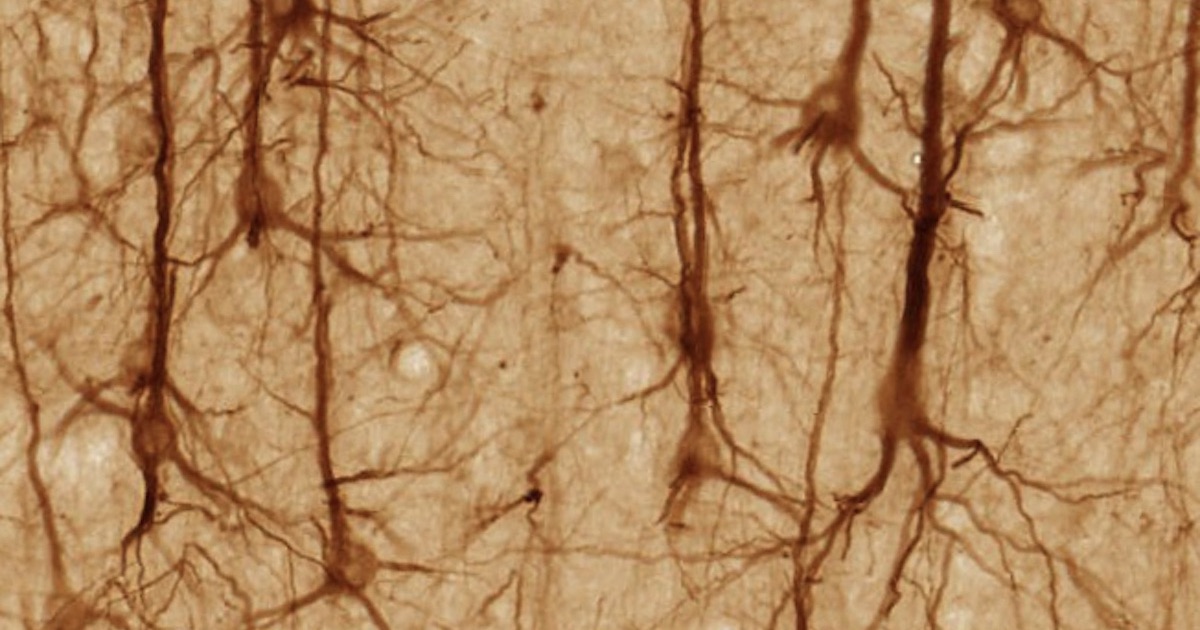
Your “forest of wires”

"The human eye is brilliantly complicated, made up of a superb,
interconnected system of approximately 40 individual subsystems. 
These include the iris, pupil, retina, cornea, lens, and optic nerve.
By simultaneously
detecting contrast while also capturing faint details, the human eye exhibits superiority over the most sophisticated camera today.

The retina, the innermost, light-sensitive layer of eye tissue, can be thought of as equivalent to the film in a camera, or as a sensor with cells that act like individual pixels in a digital display.
The primary light-sensors in the retina are the photoreceptor cells. These are of two types: rods and cones.
--
The rod cells are highly sensitive and are optimized for low-light,
black-and-white vision. There are approximately 90 million rod cells in the human eye spread across the retina.
--
Cone cells, on the other hand, are less sensitive and require bright light to function; they provide color vision.
There are approximately six to seven million cone cells.
All of them are concentrated near the macula, the oval-shaped pigmented area in the center of the retina.
Additionally, there are three varieties of cone cells that are sensitive to different colors of light. Between them, they span the visual range of wavelengths of the electromagnetic spectrum (400–700 nm):
L-cones (long-wavelength) are sensitive primarily to
red in the visible spectrum.
M-cones (medium- ) are sensitive to
green.
S-cones (short- ) are sensitive to
blue.

The retinal photoreceptor cells translate the light impressions they receive to electric pulses. These are sent to the brain via the optic nerve.
--The visual cortex, the part of the brain that processes visual information, interprets the pulses as color, contrast, depth, and other information. (There is also a lot of data processing in the retina itself.) This allows us to make sense of all the data, and ‘see’. 
We can discern about 10 million colors.

--
The eye, optic nerve, and visual cortex are separate and distinct subsystems. 
--Together, though, they capture, deliver, and interpret up to 1.5 million pulse messages per millisecond. 
--To even approach the performance of this incredible task would take dozens of supercomputers, programmed perfectly and operating flawlessly and concurrently.

Richard Dawkins has complained for decades about a “forest of
wires
” between the light coming into the human eye and the photoreceptors. In reality, the forest comprises optical fibers that collect maximal light, and transmit it to the receptors while sharpening the image.

Optimization means “the act, process, or methodology of making something (such as a design, system, or decision) as fully perfect, functional, or effective as possible.” Undoubtedly, the design of the human eye satisfies this definition.

As Psalm 111:2–3 ESV declares,
Great are the works of the Lord, studied by all who delight in them. Full of splendor and majesty is His work, and His righteousness endures forever."
CMI

Thursday, February 29, 2024

You Have SPATIAL MAPS for Color

.......for I am fearfully and wonderfully made.. 
Psalm 139:14
UNIVERSAL COLOR TO THE HUMAN EYE......and you come complete with SPATIAL MAPS of the Color Spectrum

"Harvard University, arrived in Tahiti in 1959 to study island life, he expected to have a hard time learning the local words for colors. His field had long espoused a theory called linguistic relativity, which held that language shapes perception. Color was the “parade
example,” Kay says. 
His professors and textbooks taught that people could only recognize a color as categorically distinct from others if they had a word for it. If you knew only three-color words, a rainbow would have only three stripes. Blue wouldn’t stand out as blue if you couldn’t name it.

What’s more, according to the relativist view, color categories were
arbitrary. The spectrum of color has no intrinsic organization. Scientists had no reason to suspect that cultures divvied it up in similar ways. To an English speaker like Kay, the category “
red” might include shades ranging from deep wine to light ruby. But to Tahitians, maybe “red” also included shades that Kay would call “orange” or “purple.” Or maybe Tahitians chunked colors not by a combination of hue, lightness and saturation, as Americans do, but by material qualities, like texture or sheen.
To his surprise, however, Kay found it easy to understand colors in Tahitian. The language had fewer color terms than English. For example, only one word, ninamu, translated to both green and blue (now known as grue). But most Tahitian colors mapped astonishingly well to categories that Kay already knew intuitively, including white, black, red, and yellow. It was strange, he thought, that the groupings weren’t more random.

----Almost all of the languages they examined appeared to have color words that drew from the same 11 basic categories.


First, almost all of the languages they examined appeared to have
color words that drew from the same 11 basic categories:
white, black, red, green, yellow, blue, brown, purple, pink, orange, and gray.
Second, cultures seemed to build up their color vocabularies in a predictable way. Languages with only two-color categories chunked the spectrum into blacks and whites. Languages with three categories also had a word for red. Green or yellow came next. Then blue. Then brown. And so on.

Kay and Berlin took these commonalities as evidence that our conception of colors is rooted, not in language, but in our shared human biology.

More than a decade later, however, Kay and Berlin’s revelations got some scientists wondering if color categories could be anchored in something more innate. The wellspring, they suspected, lay deep inside the human brain. But where?
Many color categories were consistent across cultures, suggesting a strong biological link.
Our color vision system, it turns out, is terrifically complex
---When light hits the human retina, it activates three classes of photoreceptor cells, called cones. Although all cones can respond to all wavelengths in the visible spectrum, each type is most sensitive to one particular slice: blue, yellow, or yellow-green
The relatively small differences between these peaks allow the brain to do some pretty sophisticated calculations, which determine the colors of the objects we look at.

This code remains something of a mystery, but neuroscientists are
beginning to crack it. There is some evidence, for example, that in the visual cortex, an information processing center near the back of the skull, the brain adjusts signals relayed from the cones to account for variations in ambient light, making a banana appear
yellow or an apple red whether it’s hanging in broad daylight or perched atop a dimly lit counter.

Our ability to discriminate between “banana yellow” or “apple red,” however, may arise near the bottom of the brain, in the inferior temporal cortex, a region responsible for high-level visual tasks such as recognizing faces, says Bevil Conway, .....he recently found tiny islands of cells in this region that seem to be tuned to specific hues, providing a sort of spatial map of the color spectrum.

That we have separate hardware for differentiating colors and organizing them is telling, says Jules Davidoff, a psychologist at Goldsmiths University of London." 
PocketWorthy/ChelseaWald

Tuesday, December 19, 2023

Impulse Conductor to the Brain

Thy hands have made me and fashioned me:
Psalm 119:73

"There are approximately 120 million rods and 6 million cones in each eye, with the cones being more concentrated toward the rear of the retina.

In the retina, 
--the photo-receptor cells synapse (or connect) directly onto receptors, 
--which in turn synapse onto ganglion cells of the outermost layer, 
--which then conduct impulses to the brain.

Lying at the rear of the brain, the visual cortex is the largest system in the human brain and is responsible for processing the visual image. 
The human mind recognizes objects with highest contrast to their surroundings first." 
BMD

Saturday, December 16, 2023

Cartography of Brain

I will praise thee; for I am fearfully and wonderfully made:
Psalm 139:14


"Neuroscientists are the cartographers of the brain’s diverse domains and territories — the features and activities that define them, the roads and highways that connect them, and the boundaries that delineate them.

Toward the front of the brain, just behind the forehead, is the
prefrontal cortex, celebrated as the seat of judgment.
Behind it lies the motor cortex, responsible for planning and coordinating movement.
To the sides: the temporal lobes, crucial for memory and the processing of emotion.
Above them, the somatosensory cortex;
behind them, the visual cortex.

Neuroscientists generally agree about how the physical tissue of the brain is organized: into particular regions, networks, cell types.

To the retired neurobiologist Steven Wise, formerly of NIMH, the findings imply that instead of categorizing cortical areas in terms of their specialized visual, auditory, somatosensory or executive functions, researchers should study the different combinations of information they represent. 
One region might be involved in representing simple combinations of features, such as “orange” and “square” for an orange square. Other regions might represent more complex combinations of visual features, or combinations of acoustic or quantitative information.

Wise argues that this brain organization scheme explains why there’s so much unexpected functional overlap in the traditional maps of mental activity. 
When each region represents a particular combination of information, “it does that for memory, and for perception, and for attention, and for the control of action,” Wise said." 
Quanta

Thursday, December 14, 2023

Visual Cortex Library

Thank you for making me so wonderfully complex!
Your workmanship is marvelous.. Psalm 139:14


"Researchers at Max Planck, Rockefeller, and Duke Universities
examined the connections in brain tissue from the visual cortex, the first stop for information coming in from the retina.

A news item from Max Planck, “No cable spaghetti in the brain,” describes the cabling nightmare:
"Nerve cells in the human brain are densely interconnected and form a seemingly impenetrable meshwork. A cubic millimeter of brain tissue contains several kilometers of wires. A fraction of this wiring might be governed by random mechanisms, because random networks could at least theoretically process information very well. Let us consider the visual system: In the retina, several million nerve cells provide information for more than 100 Million cells in the visual cortex. The visual cortex is one of the first regions of the brain to process visual information. In this brain area, various features as spatial orientation, color and size of visual stimuli are processed and represented."

But they did not find randomness. They found a well-organized structure like a library.
"The way information is sent may be comparable to a library, in which books can easier found if they are sorted not only alphabetically by title, but also by genre and by author. In a library, books are spread to different shelves, but typically not randomly. Similarly, various facets of visual perception are represented separately in the visual cortex."

Most neurons in the
visual cortex behave similarly to their neighbors. Exceptions are “pinwheels” — singular points “around which the preferred orientations of the cells are arranged as the winglets of a pinwheel.” 
They looked to see if the number and orientation of these pinwheels was random. It was not; the observations do not fit the random hypothesis.

Q: How Would This Evolve by a Darwinian Process?
The visual cortex does not “see” the outside world. If you were a neuron, operating in the dark inside brain tissue, you would only sense chemical signals coming and going.
Q: How would neurons ever “know” how to “self-organize” in such a way that their representations of incoming signals would form a 576 megapixel motion picture that corresponds to the external world? 
No mutation or series of mutations would lead to a 100-million-volume sorted library." 
EN&V